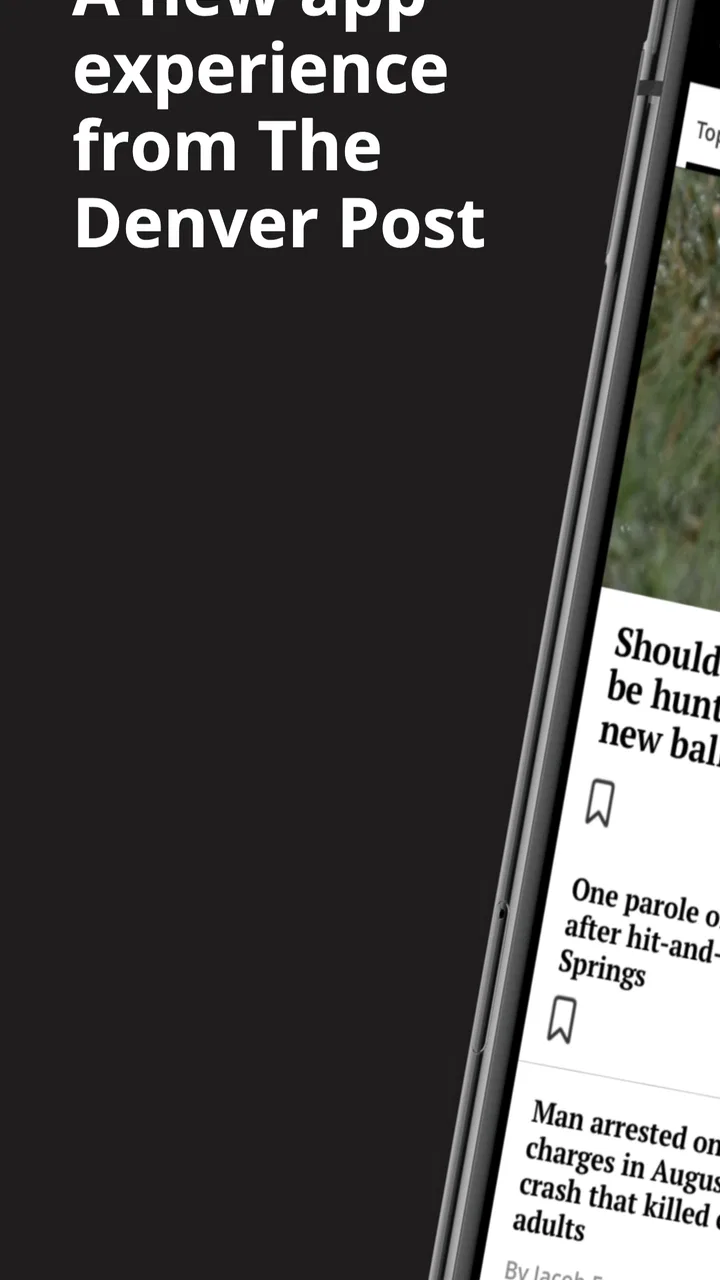
The Denver Post
- 2.2
- Rating
- 100.00K
- Installs
- Free
- Price

 Analysis by App-foxy
I spent time with The Denver Post as a focused way to follow Colorado news, local sports, and weather without treating it like a general-purpose news reader. The app comes from MediaNews Group and sits in the News & Magazines category. Its main appeal is clear: if I want Denver Broncos, Avalanche, Nuggets, Rockies, breaking local stories, and weather in one place, it gives me a direct route to that material.
That focus is also the key to deciding whether it belongs on your phone. I would not choose it as my only source for national or international news, and I would not recommend installing it simply because you want a fast headline feed. I see it as a regional newspaper app for readers who already care about Denver coverage and are willing to work around a few points of friction. The experience is free to install, carries an Everyone 10+ age rating, and supports devices running Android 8.0 or later.
How the app feels during everyday reading
My first impression is that the app is built around quick access rather than a highly personalized news system. The store summary points toward breaking news, the major Colorado teams, weather, and related coverage, so I approach it with a specific question in mind: what is happening in Denver today? That mindset makes the app more useful than opening it without a purpose and expecting it to replace every news source I use.
You May Also Like

 Blood Strike: 2.5 Anniversary
Blood Strike’s Loadouts Turn Every Drop Into a Tactical Gamble
A close look at Blood Strike’s custom loadouts: how fast access to signature weapons reshapes its battle royale rhythm, rewards preparation, and narrows the gap between fights.

 Pandora - Music & Podcasts
Pandora’s Music Is Easy to Start, but Harder to Recover
Pandora’s strength is its low-effort path from a seed to a station. Its weak spot is how much confidence it asks you to place in connection, setup, and quiet recovery.

 8 Ball Pool
 Is Built on Rivalries, Rematches, and Routine
A close look at the rivalries, rematches, shared routines, and unanswered safety questions that turn a quick pool match into a persistent mobile community.

 Samsung Music
’s Quiet Strength Is Playing What You Already Own
Its reach comes less from spectacle than from dependable access to a personal library. That simplicity is both the app’s strongest retention engine and its ceiling.

 AccuWeather: Weather Radar
AccuWeather Review: A Quick, Clear Forecast for Everyday Decisions
For everyday plans, the best forecast is the one you can understand quickly. AccuWeather makes rain timing, radar, and local conditions easy to act on, with a few trade-offs.

 Hill Climb Racing
Why Hill Climb Racing Still Turns Crashes Into One More Run
A tiny car, a bumpy hill and one more upgrade: Hill Climb Racing keeps resurfacing because its simple chaos makes every near-miss feel personal.
More From Our News Desk



For a morning check, the practical workflow is simple. I would open it while having coffee, scan the leading local stories, look for a weather update, and then move into the sports section if there was a game or roster development worth following. This is where a newspaper-branded app can beat a broad aggregator: the local context is the reason to open it, not an accidental result of an algorithm mixing together unrelated headlines.
In terms of perceived speed, I would set moderate expectations. A news app has to load current material, images, and changing sections, so the feeling of quickness depends on the connection as well as the phone. The lighter task of checking a headline list should feel more immediate than opening several full articles in succession. I would avoid judging it from one slow screen alone; local news content can change while the app is running, and that makes the reading experience different from a static magazine.
A useful habit is to decide what you want before opening it. If I am checking whether something happened locally, I go straight to the relevant section instead of wandering through every item. That reduces the time spent loading material I do not need and makes the app feel more purposeful. It is a small adjustment, but it matters when I am checking news between errands rather than settling down for a long reading session.
Where the focused coverage helps
The strongest use case is the reader who follows several Denver teams at once. Someone tracking the Broncos during football season, the Avalanche during hockey season, and the Nuggets or Rockies at other times can use one regional destination instead of jumping between separate team feeds. That does not mean every story will matter equally to you, but the combination makes the app more relevant than a single-team tool.
Weather adds another practical reason to keep it installed. I would open a local newspaper app before leaving home when road conditions, temperature changes, or an approaching weather event could affect the day. The value is not just having a forecast nearby; it is having weather alongside local reporting, so I can move from a basic update to the surrounding Denver context without changing apps.
There is also a useful distinction between this app and social media. Social feeds may surface a developing story quickly, but they can bury important local information under unrelated posts and reactions. Here, I am opening a publication-oriented source with a clearer regional purpose. On the other hand, social platforms may be better when I need immediate eyewitness discussion or a broad range of unofficial updates. I would use them as a supplement, not assume that either option covers every need.
What happens during heavier reading
The more demanding moments come when I move from a short scan into a long session: opening several articles, switching between news and sports, and repeatedly returning to the main screen. That kind of use naturally puts more pressure on a phone than reading one headline. I pay attention to whether the app remains comfortable to navigate, whether screens recover cleanly after I leave them, and whether I have to repeat actions to reach the same story.
I would not treat the app as a low-resource utility simply because it is a news reader. Articles may include images and changing content, and a long session can be more demanding than a quick headline check. If your phone has limited free storage or memory, keeping other heavy apps open at the same time may make the overall experience less smooth, especially when returning from another task. Closing unused apps before a long reading session is a sensible workaround, although it is not something every reader should need to think about.
One of my more useful habits is to read the most important story first rather than opening every headline in sequence. If I am following a developing sports story, I read that article, note the key information, and only then move to related pieces. This avoids turning a short check into a long chain of repeated loading. It also helps with data use when I am away from home, because I am less likely to open images and articles that I will not finish.
Heavy use can also expose a trade-off between breadth and concentration. The app brings several types of Denver coverage together, but that means a busy front page may contain more material than I want at a particular moment. A reader who prefers an extremely minimal feed may find a dedicated weather app or a single-team news source easier to manage. I prefer this app when I want the local picture, not when I want only one narrow topic.
Stability and recovering after interruptions
Reliability matters more to me in a news app than visual polish. If I open it during a breaking event, I want the app to recover sensibly after a brief interruption, a switch to another app, or a return from the lock screen. A news reader is most useful when it handles ordinary stop-and-start behavior without making me feel that I have lost my place every time I pause.
My practical advice is to treat the main screen as the recovery point. If an article does not return exactly where I left it after an interruption, going back to the section and reopening the story is usually less frustrating than repeatedly pressing the same control. I also avoid opening several stories at once when the connection is uncertain. That keeps the reading path simple and makes it easier to identify whether the problem is the network or the app itself.
The app’s average rating is 2.2 from around 1.3 thousand ratings, so I would not dismiss the possibility of rough edges. A rating like that is a useful warning to approach the installation with realistic expectations rather than assuming a perfectly polished experience on every phone. At the same time, a store rating cannot tell me whether a particular reader’s device, connection, or subscription situation will match everyone else’s. I would judge it against the value of the Denver coverage I actually need.
It is also worth remembering that a news app can feel unreliable when the content itself is changing. A breaking story may be updated, reorganized, or replaced by a newer report while I am reading. That can look like a navigation problem even when it is simply the nature of live publishing. My test is whether I can return to the main coverage area and continue finding current material without confusion.
Device limits and the cost question
Compatibility is reasonably approachable for older Android users because the app works from Android 8.0 onward. That does not guarantee identical behavior across every device, though. An older phone may technically meet the minimum requirement while still feeling slower when it loads image-heavy pages or switches repeatedly between sections. I would install it on an older device if Denver coverage were important, but I would keep expectations lower than I would on a recent phone.
The app is free to download, which makes trying it straightforward. The important financial detail is that in-app purchases range from $14.99 to $174.99 per item. I would therefore read the purchase screen carefully before committing to anything. The free installation should not be confused with unlimited access to every part of a newspaper service. If you only want occasional headlines, check what you can comfortably use without paying; if you rely on deeper local reporting, decide whether the available purchase fits your reading habits.
That pricing range also changes who should install it casually. Someone who wants to test the local coverage for a few days can start without an upfront download charge, but I would not tap through a subscription or purchase prompt just to remove uncertainty. First, I would use the app during the times that matter to me: a normal weekday, a busy local news day, and a sports-heavy evening. That gives a clearer sense of whether the coverage justifies spending money.
Storage and battery demands are difficult to separate from reading behavior. A short headline check is naturally lighter than a long session with many article images, and leaving any app open while moving between tasks can affect battery life on an older phone. My approach is simple: read what I came for, return to the main screen, and close the app if I am finished. That is especially useful when I am traveling or relying on a smaller battery.
Who will get the most from it
I would recommend this app first to people living in or strongly connected to Denver who want local reporting and sports in one place. It is particularly suitable for a reader who follows more than one Colorado team and wants weather and breaking news nearby. The app also makes sense for someone who prefers a newspaper’s regional focus over a general feed that mixes local stories with national headlines selected by an algorithm.
A realistic scenario would be a Denver commuter checking the weather before leaving, scanning a breaking local headline during lunch, and then reading a Broncos or Avalanche update on the way home. That person does not need a separate app for every interest and may appreciate having the local context grouped together. The best experience comes from using it as a purposeful daily check rather than expecting it to entertain you indefinitely.
I would tell a reader outside Colorado to think twice. If Denver news is not personally relevant, the app’s strongest reason to exist disappears. Likewise, someone who wants only national politics, global reporting, or a highly customizable multi-city feed will probably be happier with a broad news service. A dedicated sports app may also be better for live scores and minute-by-minute game tracking, while this app is more appealing for regional reporting around those teams.
How it compares with familiar alternatives
Compared with a general news aggregator, this app offers a more defined local identity. An aggregator is usually better when I want many publishers, several regions, and extensive topic controls. The Denver Post is better when I want to reduce that choice and start with Denver-oriented coverage. The trade-off is obvious: focus can save time, but it can also leave gaps if my interests extend far beyond Colorado.
Compared with a mobile browser, the dedicated app is more convenient for repeated visits. I do not have to begin by finding the publication, and the experience is organized around the app’s own sections. A browser remains the more flexible option if I dislike installing a separate app, want to compare several sources side by side, or need to move freely across unrelated sites. I would keep the browser as a backup rather than assume this app should replace it.
Compared with social media, the app should feel more intentional and less noisy for local reading. Social platforms may win for rapid conversation, public reaction, and links from many sources, but they can also make it difficult to tell what deserves attention. I prefer the app when I want to sit down with a report; I prefer social feeds when I am trying to discover what people are discussing in real time. Neither is a complete substitute for the other.
My performance verdict
The Denver Post is a specialized news app with a clear regional purpose, not a universal answer for every reader. I find its strongest qualities in the combination of Denver reporting, weather, and coverage of the Broncos, Avalanche, Nuggets, and Rockies. That mix can make a daily routine more efficient for local readers, especially those who would otherwise rotate through several sources.
Its weaker side is the uncertainty that comes with a low average rating and a purchase structure that deserves attention before spending. I would also be cautious about expecting flawless speed on older hardware or during long, image-heavy sessions. The app is compatible with Android 8.0 and newer, but minimum compatibility is not the same as a guarantee of identical performance across devices.
MediaNews Group has produced something worth trying if Denver is central to your news habits. I would install it free, test it during ordinary and busy reading periods, and decide based on how often the local coverage genuinely saves me time. My recommendation is conditional but positive for Denver-focused readers: use it as a regional news companion, keep another source for broader coverage, and approach paid options deliberately rather than automatically.
For me, that is the fairest way to view it. It can be useful every day when the content matches your location and interests, but it is not strong enough as a one-size-fits-all news replacement. If you want Colorado context and can accept some performance and access trade-offs, it deserves a trial. If your priority is a fast, broad, highly customizable news stream, a different category of app will likely serve you better.
FAQs for The Denver Post
01What is The Denver Post app?
The Denver Post app is a mobile news platform for following local, regional, national, and international stories from The Denver Post. After installing it, readers can browse breaking news, politics, sports, business, entertainment, lifestyle, and opinion coverage in one place. The app is designed for people who want quick access to Denver-area reporting and regular updates while using an Android or iOS device.
02Is The Denver Post app free to download and use?
The app can generally be downloaded free of charge, but access to all articles and premium features may depend on your subscription status. Some stories may be available to everyone, while other content can be limited by a digital paywall. Before subscribing, check the current pricing, trial terms, renewal conditions, and available plans shown in the app or on the official subscription page.
03Do I need a subscription to read articles in The Denver Post app?
A subscription may be required for unlimited access to the publication’s full article library. Non-subscribers can often view selected news or introductory content, but repeated access may be restricted. Subscribers typically receive broader digital access, although the exact benefits can change. If you already have a qualifying Denver Post account, signing in may unlock content included with your existing plan.
04What kind of news and features are available in the app?
The Denver Post app focuses strongly on Colorado and Denver news, including local government, crime, education, weather, transportation, and community reporting. It also includes sports coverage, business, culture, entertainment, opinion, and major national stories. Depending on the version and account type, users may find breaking-news notifications, saved articles, personalized content, multimedia reports, and other tools intended to make daily reading more convenient.
05Does The Denver Post app require an internet connection?
An internet connection is normally needed to load the latest stories, images, videos, and breaking-news updates. Reading performance may vary depending on your Wi-Fi or mobile-data connection, especially for multimedia content. Some versions or subscription features may allow articles to be saved for later reading, but you should not assume every story is available offline. Check the app’s current options after signing in.
Pros
- Covers Colorado news
- politics
- sports
- business
- and local communities.
- Offers breaking news alerts for important regional developments.
- Includes investigative reporting and in-depth local journalism.
- Provides access to photo galleries
- videos
- and multimedia stories.
- Useful for readers who want reliable Denver-area updates in one app.
Cons
- Many premium articles require a paid subscription to read in full.
- Some content may load slowly on weaker mobile connections.
- Frequent notifications can feel excessive unless carefully customized.
- Coverage is primarily regional
- with limited national news depth.
- The app may use noticeable storage and battery for media-rich content.

The Denver Post
Gallery